13 Art and Music
Music
The Language of Love and Loss: A Journey Through the Gabala Music Festival
Music in Azerbaijan is not merely entertainment, it is an art form woven from passion, history, and the soul of the people. It is created through the voice, through poetry, through centuries-old instruments played with precision and emotion. The music speaks in microtonal waves, with intervals so small and delicate that the untrained Western ear may not always grasp their depth. Yet, to those who listen with the heart, something ancient stirs.
We had the privilege of attending two unforgettable days of the 14th Gabala Music Festival, a cultural jewel tucked within the heart of the Caucasus. At dawn, we boarded a train from Baku, luggage in hand, hearts full of anticipation, determined to arrive in time for the first concert of the day. Without pause, we headed straight to the venue. What surprised us most was that very few foreigners were present. We sat among locals, sharing a moment that felt both intimate and monumental. After the first concert, we were approached and interviewed by a local newspaper — perhaps intrigued by the presence of outsiders moved by such distinctly Azerbaijani soundscapes.
That day, we attended two more concerts. The final one was a revelation, a performance dedicated to Mugham and traditional folk music, where ancient poetry and emotion merged with sound. Understanding Mugham as a foreigner is no easy task. The music flows through quarter tones and even smaller intervals, defying the scales we are used to. It is not just melody, but a deep emotional storytelling, expressions of love, longing, sorrow, and ecstasy, often improvised in the moment, guided by centuries of tradition.
The orchestra was a marriage of East and West, blending Western instruments like piano, cello, and violin with Azerbaijan’s rich collection of traditional instruments. The Tar, held against the chest like a heartbeat, plucked out sharp notes reminiscent of a banjo. The Saz offered a deeper, warmer sound, its long neck perfect for complex microtonal passages.
Then there was the Balaban (or Duduk), which reminded me of an Oboe or even a Clarinet though more melancholic, as if shaped by mountain winds and ancient tales. In Azerbaijani, it is called fleytasi. The Kamāncha added a haunting lyrical voice, played upright with a bow, while the Naghara (a traditional drum with fish-skin stretched taut over a frame) echoed through the hall like the beating of ancestral drums.
The experience touched us deeply. So much so, that out of curiosity, I asked AI to generate a love poem, something that could be imagined as the lyrical foundation for a Mugham performance. The result:
Verse
O man of the plains, with eyes like flame,
You came like a whisper, calling my name.
My scarf in the wind, my song in the air,
I waited for you with a heart laid bare
Chorus
Come walk with my song through poppy and vine,
No riches I ask — just your hand in mine.
Let love be the fire, and music the way,
Together we’ll dance at the close of the day
Now imagine those words set to the rhythm of the Tar, the voice of a singer trained in the ancient style of Mugham, the quiet pulse of the Naghara beneath it all. This, I thought, is not music — it is storytelling through sound. It is love shaped by breath and echo.
Many of the artists at the festival came from Shusha (Şuşa) in Karabakh (Qarabağ) — a city considered the cradle of Azerbaijani musical heritage. After the festival, we visited the Azerbaijan National Museum of Music in Baku (correct name: Azerbaijan State Museum of Musical Culture). a perfect finale to our musical journey. Inspired by the beauty and history we had absorbed, I even tried composing a short piece of my own, as if the spirit of Mugham had briefly whispered through me.
To explain the difference between Mugham and Western music in more detail, one must first step into two completely different musical worlds. Western music is based on a system of equal temperament, where the scale is divided into twelve equal steps. Every tone is measured and structured, like pieces on a chessboard—predictable, balanced, and harmonized. In contrast, Mugham is a living tradition rooted in improvisation, emotion, and the oral transmission of knowledge. It uses microtones—those delicate intervals between Western notes that cannot be played on a standard piano. These tones give Mugham its haunting, expressive quality, bending and stretching sound in ways that evoke deep feeling. While Western music often seeks resolution and symmetry, Mugham embraces spiritual searching, guiding listeners on a journey through mood, memory, and mystical reflection. It is not just music; it is storytelling with sound, shaped by centuries of cultural memory and poetic expression.
As Westerners, we often struggle to fully understand the passion and depth embedded in this music. But perhaps that is the beauty of it, you don’t need to understand it intellectually. You just need to feel it. And once you do, it never leaves you.
Art
One of the most fascinating yet lesser-known aspects of Azerbaijani art is its ancient tradition of shebeke, a meticulous form of stained-glass work made entirely without glue or nails. Found in the architectural jewels of Sheki, especially the Sheki Khan’s Palace, shebeke is a technique where master artisans fit together hundreds or even thousands of tiny wooden pieces and colored glass like a puzzle, creating intricate geometric and floral patterns. What makes it truly extraordinary is that each piece is held in place solely by the precision of the joinery. This delicate art requires not only incredible craftsmanship but also deep mathematical understanding and artistic vision, often passed down from master to apprentice over generations.
While it may resemble mosaic at first glance, shebeke is fundamentally different. Mosaics are typically fixed with adhesives onto a surface, often using stone or ceramic tiles. Shebeke, by contrast, is constructed as a freestanding lattice, where no glue or nails are used, and the stained glass is fitted within a wooden framework that relies entirely on interlocking joints. The result is not just decoration, but a functional window that glows with natural light and changes throughout the day. Unlike the more static and surface-bound mosaic, shebeke is dynamic, luminous, and architectural — a vivid expression of Azerbaijani identity and technical artistry that continues to captivate visitors today.
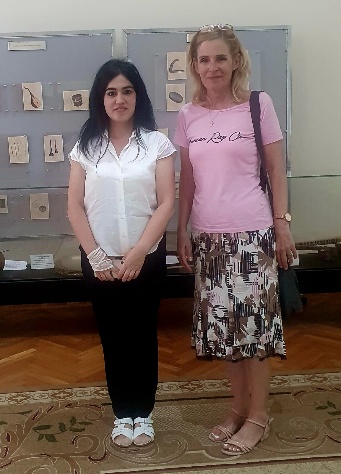
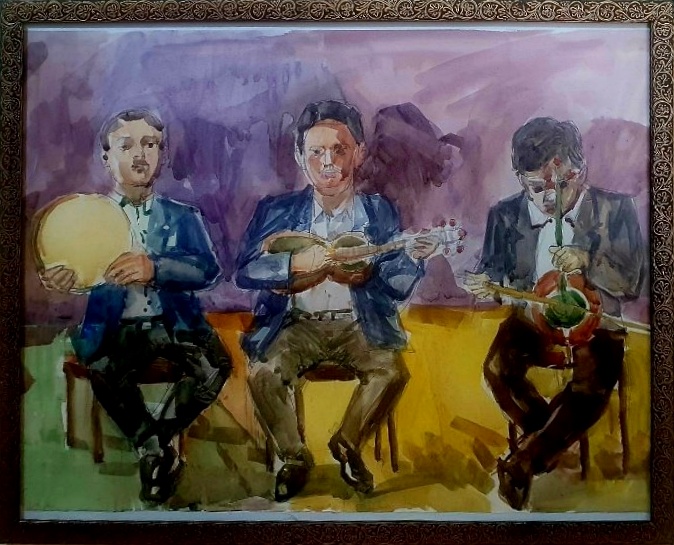
On one of our many excursions, we met a local artist whose gentle presence and captivating work quietly stayed with us. Her art spoke more than words, yet in our fascination, we never thought to ask her name, a small regret that lingers like a forgotten signature on a beautiful painting. One of her pieces had been exhibited at the museum, standing proudly among the curated collection. It felt like a hidden thread connecting our journey to hers, a fleeting encounter that somehow became part of the story we carried home.
Azerbaijan Featuring on the World Map
Azerbaijan’s commitment to sustainability took global stage when President Ilham Aliyev addressed the 3rd Shusha Global Media Forum, confidently stating, “We do not use coal or fuel oil to produce electricity. We rely on hydropower, natural gas, and now solar energy. Our green agenda is very ambitious.” This focus on renewable energy aligns with Azerbaijan’s role as host of COP29, a significant global climate summit that brought the world’s attention to a country many had barely heard of before. For Azerbaijan, hosting COP29 was more than an environmental achievement—it was a chance to introduce itself to the world, not only as an energy producer but as a modern, forward-looking nation contributing to global climate solutions.
We had the unique opportunity not only to visit the COP29 exhibition but also to serve as a speaker during this landmark event in 2024. The dedication invested to ensure the country was ready for the world’s arrival was remarkable. Highways leading into Baku were transformed with full-sized gardens, colorful flower walls, and green spaces that offered a fresh face to daily commuters and foreign guests alike. The chaotic area in front of the main railway station, once crowded with taxis and buses competing for space, was completely redesigned. Beautiful gardens replaced concrete, and a dedicated, eco-friendly bus station now provides order and beauty in equal measure. Visitors can now relax on benches surrounded by greenery, while electric buses recharge nearby.
Special bus routes to the COP29 venue were implemented free of charge, and thousands of people were trained to assist foreigners upon arrival—small gestures that made a big difference. One evening, we shared dinner with delegates from Somalia, exchanging stories and learning about a country we had previously known little about. And we were not alone, across the city, similar conversations unfolded between people from different corners of the world, all discovering new cultures in an unexpected place: Azerbaijan. COP29 was not just a climate summit; it became a moment where the world finally paused to learn where Azerbaijan was, and who its people are.
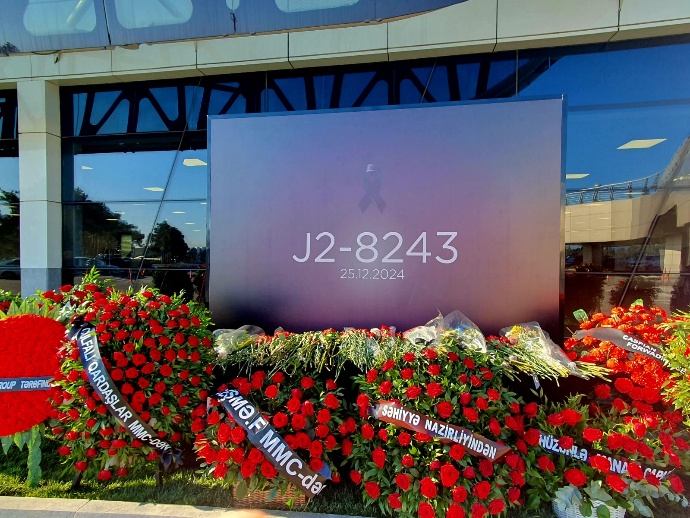
On Christmas morning (2024), Azerbaijan Airlines Flight 8243, an Embraer 190 named Gusar, departed Baku for Grozny but never reached its destination. As it approached Chechnya, debris, later confirmed as shrapnel, pierced the fuselage, disabling hydraulics and navigation. The pilots heroically kept the crippled aircraft aloft for nearly 40 minutes, diverting it across the Caspian Sea before it tragically crash-landed near Aktau International Airport in Kazakhstan.
Of the 67 souls aboard, 38 perished including both pilots and a flight attendant, while President Ilham Aliyev stated the aircraft was “shot down by Russia, unintentionally” during Russian air-defense activity repelling drone threats over Grozny. Moscow later issued an apology, calling it a “tragic incident” but stopped short of accepting full responsibility.
Investigators from Azerbaijan, Russia, and Kazakhstan converged on the scene. Satellite imagery and wreckage photos—riddled with metal fragments—strongly suggest the aircraft was hit by a Russian Pantsir-S missile. In the days that followed, Azerbaijan demanded Russia not only apologize but also admit guilt, hold accountable those responsible, and provide compensation.
This heartbreaking episode echoes past tragedies and has prompted international concern over civilian flights through contested or militarized airspace.