11 Food
Shelves in Azerbaijani supermarkets often overflow with sweets, cookies, and snacks, revealing that healthy eating is not always a priority. Many of these sweet treats fall under the category of ultra-processed foods, known to increase risks of obesity, heart disease, and cancer.
Cultural and economic factors deeply influence this preference. Azerbaijani hospitality centers around serving tea (çay) accompanied by an array of sweets such as baklava, shekerbura, Turkish delight, halva, jams, and candies. Grocery stores respond to this tradition by offering extensive selections, including both imported and local brands. Historically, many confections came from Turkey, Russia, Ukraine, and Iran, but recent trends show a shift towards local manufacturing.
In rural villages, fresh produce remains scarce at local street shops. Even during train journeys, meals often consist solely of ultra-processed foods. Small shops frequently prioritize snacks, soda, and candy over fresh produce, particularly in residential areas where purchases are small and frequent. Children’s school meals similarly tend to feature processed foods.
Contrastingly, Western European stores emphasize fresh produce and healthier snacks. In Azerbaijan and other parts of Eastern Europe and Central Asia, sweets and processed snacks maintain greater prominence, shaped by tradition and factors like availability and pricing.
Markets
The markets in Azerbaijan echo with a sense of timelessness, conjuring images of ancient bazaars that have existed for centuries. Stalls brim with everything from vibrant produce to practical household wares. Yet, amid this abundance, a curious absence stands out: souvenirs bearing the names of towns and villages are surprisingly scarce. Fridge magnets, keyrings, even a simple cap with “Azerbaijan” embroidered on it—items often taken for granted elsewhere—prove elusive here. For a land so steeped in culture and history, the lack of small keepsakes leaves a quiet void for those who seek tangible reminders of place.
Vendors tend their stalls with care, constantly adjusting displays to better entice passersby. The art of haggling exists, though not as freely practiced as in other regions; still, persistence is often rewarded with the occasional bargain. Markets, strikingly expansive for the modest towns they serve, function as vital centers of commerce and community. Traditional storefronts seem secondary, their role diminished by the enduring relevance of open-air trade. On the market’s fringe, a fleet of weathered Lada taxis awaits. No formal queues, no visible order—yet a seamless system governs the flow. Driver and passenger move in quiet synchrony, guided by a rhythm understood without words.
Just a short walk from Baku’s main railway station, along the railway line, lies Yaşıl Bazaar—the Green Market. This path was traversed many times, through the sweltering heat of summer and the occasional dusting of winter snow. Along this familiar route, a solitary figure was often noticed—a man who had made this stretch his home. He slept quietly on a makeshift bed at a street corner, blending into the city’s fabric. Occasionally, he wandered nearby and spoke in Russian, but his words were not understood. Communication remained limited to silent nods and brief eye contact, a quiet acknowledgment across the language barrier.
At the entrance to Yaşıl Bazaar, stillness gives way to a surge of life. The air swells with the aroma of fresh herbs, sharp pickles, sweet preserves, and the unmistakable scent of freshly butchered meat delivered in wheezing, Soviet-era Ladas. Vendors call out above the din, fingers flashing across heaps of produce: cherries, tarragon, honey, rice, walnuts. Just beyond the gates, hopeful regulars linger—ready to carry a bag, run an errand, or seize any small opportunity.
But this is more than commerce. Within Yaşıl Bazaar, the pulse of Azerbaijani daily life beats steadily. Banter floats over crates of tomatoes. A taste of pickled cucumber seals a bargain. Elderly women examine bunches of herbs with quiet concentration. Each stall becomes a living chapter of the city’s story—shared in gestures, scents, and the rustle of plastic bags.
Tradition and modernity coexist here. This is not merely a market—it is a ritual, a sensory archive of culture and continuity.
Among the unexpected discoveries found amid the cluttered shelves of Azerbaijan’s markets is soap—specifically, Naftalan soap. Made with therapeutic oil drawn from the Naftalan region, combined with kaolin clay and lanolin, it promises relief for dry skin, eczema, and hair loss. The effect is noticeable—smoother skin, fewer irritations—though it leaves behind a lingering scent reminiscent of an auto repair shop.
For those seeking a milder touch, donkey milk soap presents a gentler alternative. Rich in vitamins and known for its nourishing, anti-aging qualities, it carries a far softer fragrance and leaves the skin supple and refreshed.
Azerbaijan’s soap offerings, much like its bazaars, reveal layers beneath the surface—functional, fragrant, and memorably unique.
So, whether it’s the deep, earthy richness of Naftalan oil or the luxurious creaminess of donkey milk, Azerbaijan’s soaps offer something far beyond the ordinary—and make for surprisingly memorable souvenirs.
National Food
According to our friend Saeed, “When you look at a country’s cuisine, you can understand its history. If the people were herders, their food would be simple and practical, often preserved, with no unnecessary fuss, designed to last a long time.”
Azerbaijani cuisine reveals its richness through a handful of traditional dishes that stand out among many. Among them, Shakh Plov commands attention—often called the “King of Pilafs.” Reserved for special occasions such as weddings and family celebrations, this dish captivates with its luxurious flavors and grand presentation.
Known also as the “crown pilaf,” Shakh Plov features saffron-infused rice layered meticulously with tender lamb or chicken, nuts, and dried fruits like apricots, sour cherries, and raisins. A distinctive element is the lavash crust—a thin, golden, brittle bread encasing the pilaf like a delicate shell. The preparation of this dish is a precise art: each piece of lavash is carefully aligned and shaped to form an even, sealed crust, crucial to prevent splitting during cooking. The sight of this careful craftsmanship remains unforgettable.
When brought to the table, the moment the crust is sliced open releases a mouthwatering aroma that heightens anticipation. The fusion of saffron-scented rice, tender slow-cooked meat, and sweet dried fruits creates a sensory experience both comforting and indulgent.
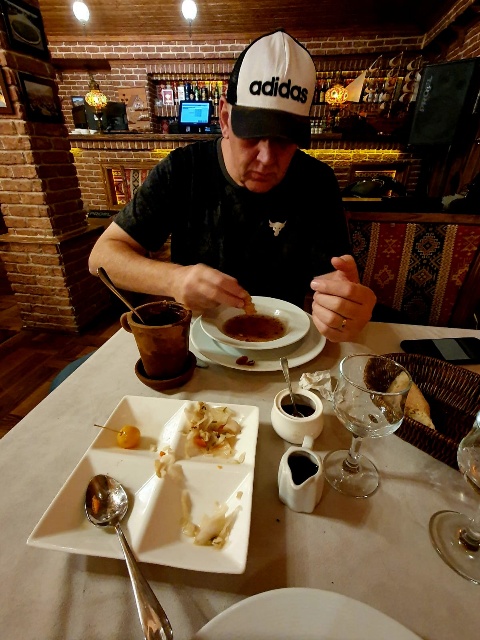
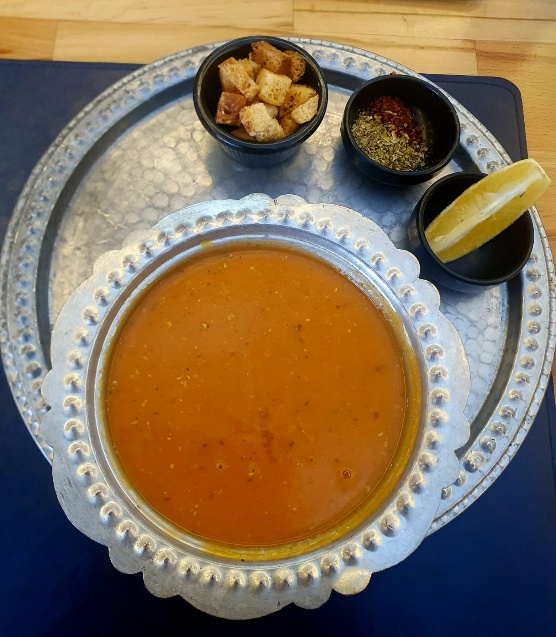
Another noteworthy dish is Dushbara, a traditional Azerbaijani soup. Tiny dumplings, meticulously filled with spiced minced meat, cook gently in a light, flavorful broth. Each bite of these delicate dough pockets bursts with flavor, offering comfort and satisfaction, especially in colder seasons. Alongside Shakh Plov, Dushbara embodies Azerbaijan’s culinary heritage—where artistry, tradition, and rich flavors converge on the table.
In Azerbaijan, meat cutting and naming traditions diverge significantly from Western butchery styles, shaped by cultural, culinary, and practical considerations. The approach to lamb and beef often follows traditional whole-animal butchery, with animals butchered by hand to suit dishes like stews, kebabs, and pilafs, rather than conforming to standardized factory-style cuts.
Here’s how meat cuts (especially chops) differ in Azerbaijan:
Lamb Cuts (Quzu əti or qoyun əti)
Lamb is widely used in Azerbaijani cuisine, and the cuts are simpler, usually divided into functional parts rather than precise Western-style “chops.”
- Qabırğa (Ribs)
- Used for grilling or kabab.
- Sometimes split into individual ribs (similar to “lollipop” chops) but often cut with more meat and bone than Western lamb chops.
- Bel əti (Loin/Back meat)
- Cut into thicker pieces, sometimes bone-in, for bozbash (stew) or kebab.
- Instead of neat loin chops, it might be cut crosswise or hacked into chunks.
- Çiyin (Shoulder)
- Used for stews like piti or khashlama.
- Not often separated into shoulder “chops”; usually chopped into stewing pieces with bone.
- Bud (Leg)
- Often used whole or in large roasts for holidays.
- Not typically chopped into steaks or “leg chops” as in Western cuts.
Pork Chops
- Pork is not widely consumed due to Islamic dietary traditions.
- In some Russian or Christian Azerbaijani communities, pork may be available, but standard pork chops (like rib or loin chops) are not common or culturally emphasized.
Beef (Mal əti)
- Sümüksüz kabablıq ət (Boneless meat for kebab)
- From sirloin, chuck, or rib — not separated into classic Western ribeye or T-bone cuts.
- Sümüklü ət (Meat with bone)
- Often cut across the bone (like flanken style) for broth or stew dishes.
- Bel və qabırğa hissəsi (Back and rib area)
- Occasionally used for shashlik; not finely separated into “chops” but rather kebab chunks.
Key Differences from Western Cuts
| Western Cuts | Azerbaijani Approach |
|---|---|
| Precise, uniform chops | Rougher, functionally-based cuts |
| Separated by cut name | Separated by use ( grilling, stewing, etc) |
| Loin/rib chops are common | Mixed bone-meat cuts preferred |
| Boneless common | Bone-in preferred for flavor and broth |
| Factory processed | Often hand-butchered |
In Azerbaijan, the belief persists that high-quality meat requires minimal seasoning—flavoring it heavily is often seen as a sign the animal was old and the meat inferior. This contrasts sharply with culinary practices in many other cultures where generous use of spices is prized. When the meat is truly good, only salt and pepper are deemed necessary. Lambs are typically slaughtered very young, sometimes as early as six months, preserving the tenderness and natural flavor of the meat. While marination is generally discouraged, a brief 30-minute soak in onions remains one of the trusted methods for achieving exceptional tenderness.
One such renowned dish is Piti, a traditional Azerbaijani stew deeply rooted in the culinary heritage of Sheki. Regarded as one of the region’s signature dishes, Piti features bone-in lamb, onions, garlic, crushed walnuts, and dried fruits such as prunes, all slow-cooked in individual clay pots. The long cooking time allows the ingredients to meld into a rich, aromatic stew, where tender meat and a deeply flavored sauce reveal both savory depth and subtle sweetness. In Sheki, Piti is more than sustenance—it symbolizes hospitality, tradition, and a reverence for time-honored techniques. Often prepared for special occasions or to honor guests, this rustic mountain dish embodies the soul of Sheki’s cuisine.
Vegetables and Fruit
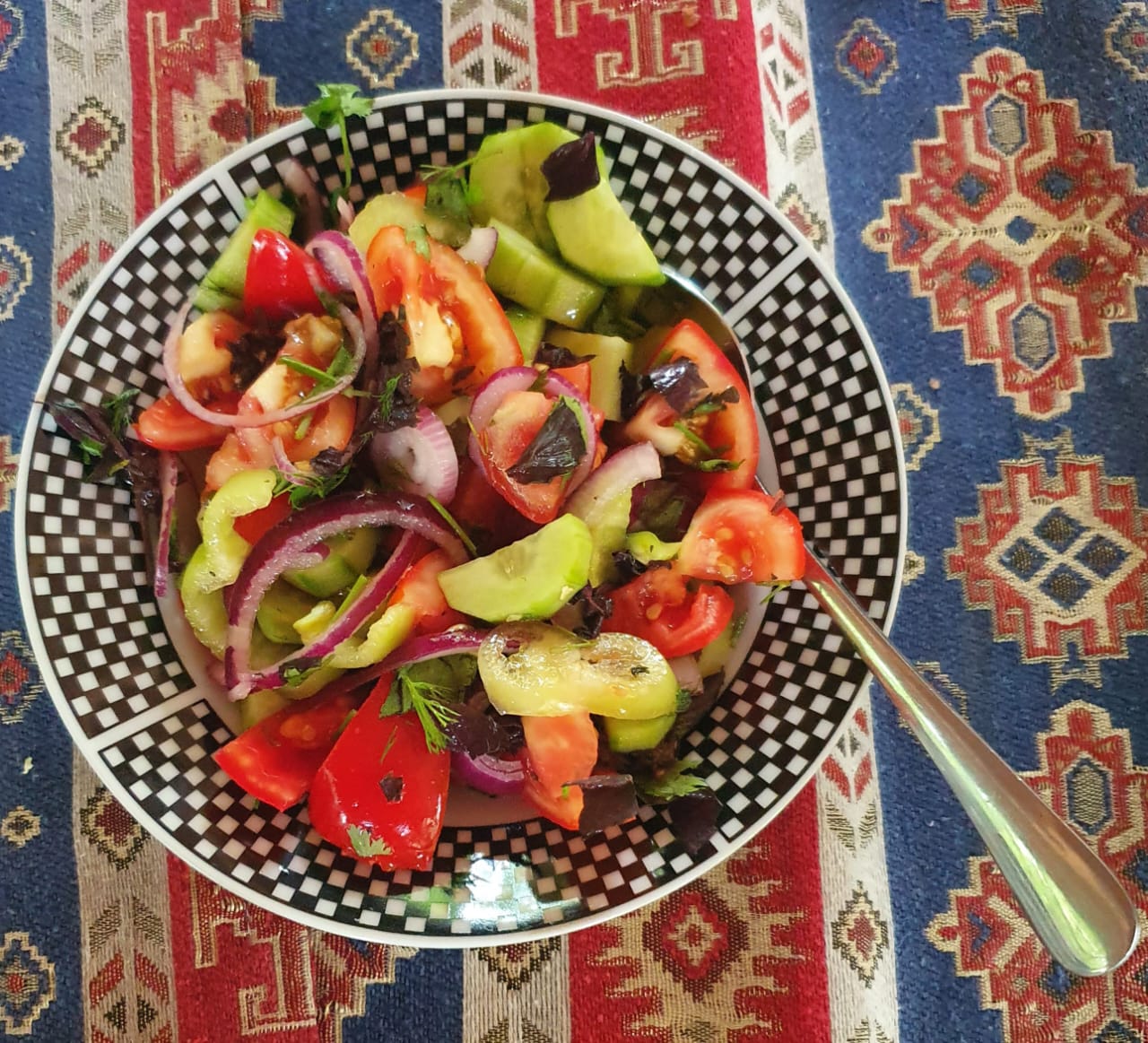
The South Caucasian nation where the nar—Azerbaijani for pomegranate—holds an almost-sacred status as a national symbol. Revered for its vibrant color, medicinal properties, and cultural significance, the pomegranate features prominently in local festivals, art, and cuisine, symbolizing abundance, vitality, and heritage.
Exotic fruits, though increasingly popular, can be difficult to source locally, and imported varieties often lack in quality. Yet in Azerbaijan, efforts to cultivate such fruits have gained momentum. By 2019, banana plants had already taken root in the southern regions, while research institutes began experimenting with papaya, mango, and avocado. Azerbaijan presents a rare geographical case, encompassing nearly all of the planet’s climate types within a single country—from the dry and humid subtropical conditions of Lankaran to the mountain tundra of the Greater Caucasus. With much of its territory falling within the subtropical zone, the southern regions now support the cultivation of oranges, tangerines, lemons, feijoa, kiwi, and other exotic fruits, made possible by this extraordinary climatic diversity.
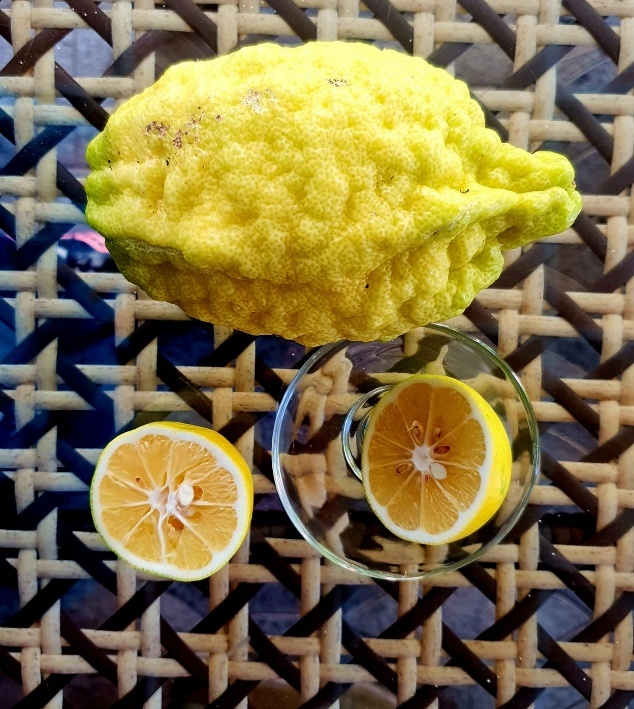
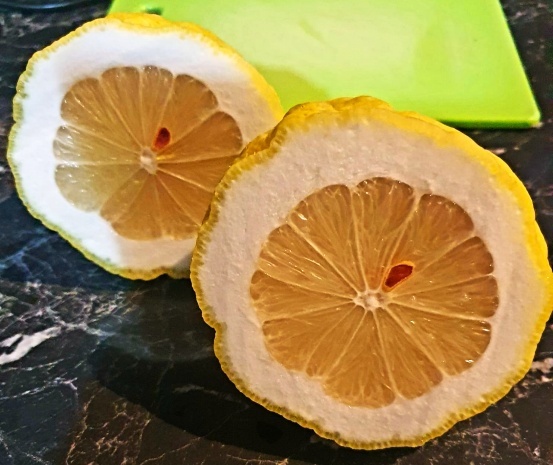
The lemon variety known as “Pantaroza,” though not indigenous to Azerbaijan, has earned a favored place in local homes and greenhouses. Valued for its ornamental blossoms, adaptability to indoor cultivation, and unique citrus profile, it is especially appreciated in regions such as Lankaran, where citrus growing is a long-standing tradition.
Bread
For lovers of bread, Azerbaijan offers something close to paradise. Bread holds profound cultural and culinary significance, revered as a symbol of hospitality and life itself. Traditional varieties such as tandir bread and shorgoghal are crafted using ancient methods, with distinct shapes and flavors that vary by region. These breads form an essential part of both daily meals and festive occasions.
Over time, one lesson becomes clear: in Azerbaijan, bread is treated with deep respect. Stale loaves are never discarded with regular waste. Instead, they are placed in separate bags and hung outside bins—often attracting grateful Hooded Crows. This practice reflects a cultural reverence for bread, seen as sacred and a symbol of abundance. The gesture ensures that no bread goes to waste, often finding a second purpose as animal feed.
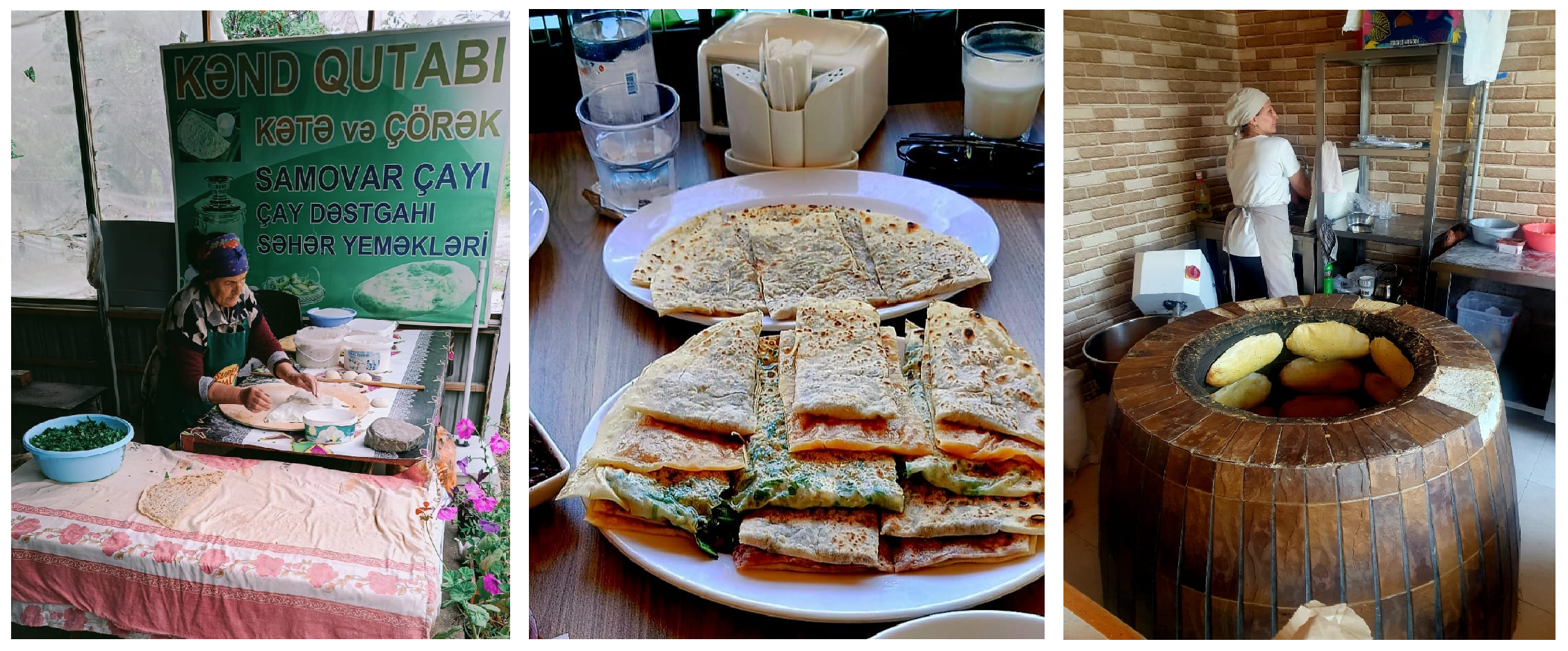
Although not quite a bread in the traditional sense, Gutab deserves mention. This thin, stuffed flatbread is crafted from rolled-out dough filled with a variety of ingredients and cooked on a griddle. Celebrated as one of Azerbaijan’s most cherished traditional dishes, Gutab stands out for its handcrafted simplicity, regional diversity, and cultural significance.
The preparation is where its true character emerges. Achieving the ideal dough requires rolling it paper-thin by hand with a small rolling pin known as an oxlov. The dough must become nearly translucent—elastic yet strong enough to encase the filling—reminiscent of strudel dough, thin enough to read a newspaper through. Mastering this technique takes time and the right tools, but once the dough is perfected, attention turns to the equally important step: the filling.
Each region brings its own touch to Gutab, using fillings that reflect seasonal availability and local ingredients. A variety of combinations can be explored, including:
– Finely chopped herbs such as coriander, dill, parsley, and spinach
– Ground lamb or beef with onion and black pepper
– Pumpkin, grated and lightly spiced
– Chestnuts or walnuts mixed with greens
– Cheese, either fresh or aged, often combined with herbs
– Pomegranate seeds for a sweet-tart accent in herb-based versions
These regional variations not only highlight Azerbaijan’s agricultural richness but also celebrate the diversity embedded in its culinary traditions.
Once filled, the dough is folded in half to create a perfect crescent shape—symbolic of abundance in some Azerbaijani regions. The edges are sealed gently by hand, using fingers or a fork. No machines, only craftsmanship.
Gutab is traditionally cooked on a saj, a convex metal griddle set over an open flame. This method imparts a slightly crispy texture, golden brown spots, and a distinctive smoky aroma. In modern kitchens, a non-stick pan can serve as a suitable substitute, yielding excellent results.
Typically served piping hot, Gutab is brushed with a touch of butter and accompanied by sumac—a tangy, deep red spice made from dried berries. Though not native to Azerbaijan, sumac is widely used across the region to lend a lemony brightness and vibrant color to dishes. Depending on the region, Gutab may also be served with yogurt or pomegranate sauce, enhancing its layers of flavor.
Confectionery
Cultural Significance during Novruz
As part of the Novruz celebration (see Traditional Celebrations), three symbolic pastries are traditionally prepared.
The trio of shekerbura, pakhlava (also known as baklava), and goghal holds a central place in Azerbaijani Novruz Bayramı festivities. Each sweet carries profound cultural and spiritual meaning, with origins rooted in Zoroastrianism—an ancient faith that deeply shaped the region’s pre-Islamic traditions.
Each sweet represents a key cosmic or elemental symbol:
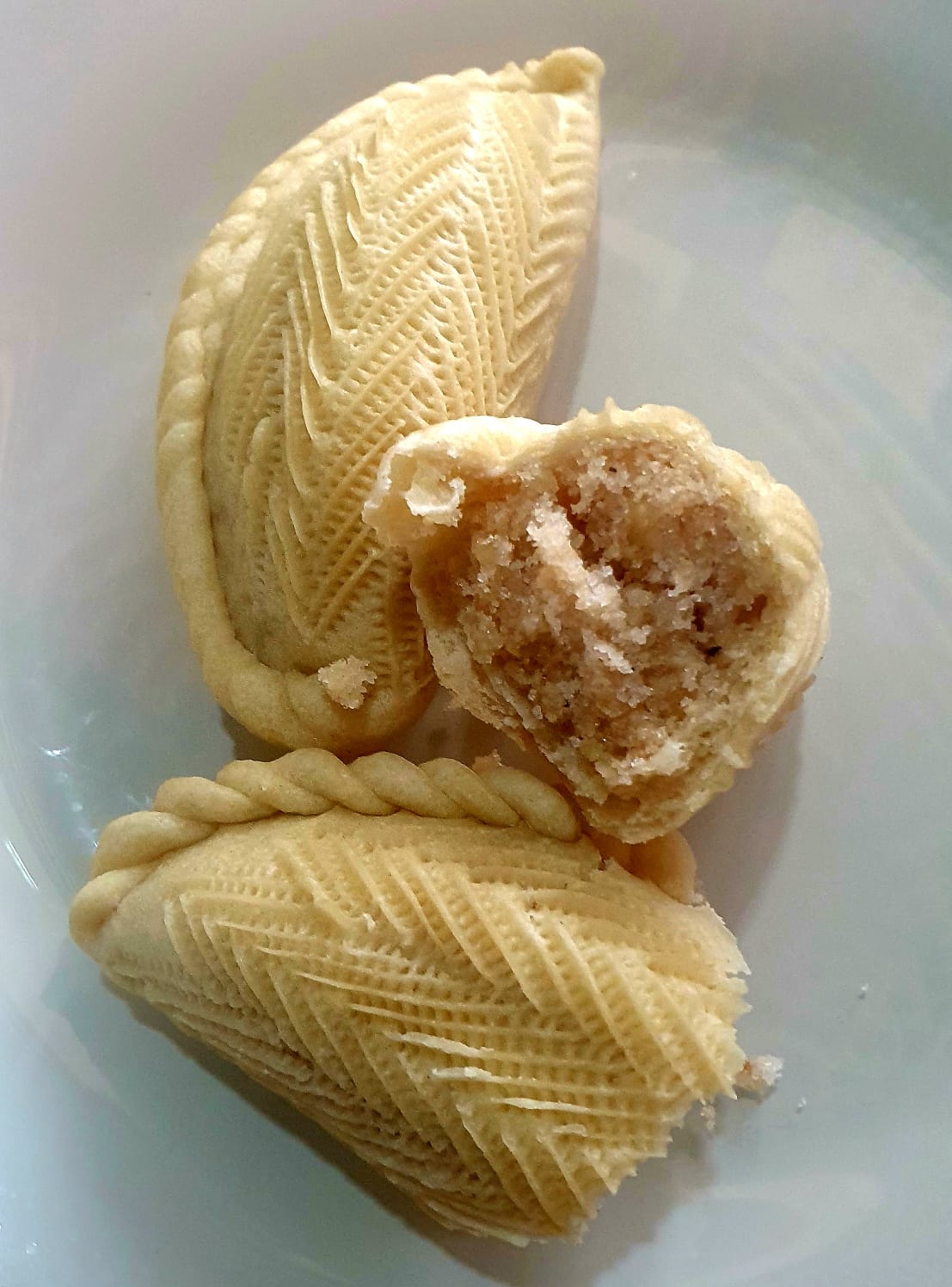
- Shekerbura, with its delicate crescent shape and nut filling, symbolizes the moon.
- Pakhlava, rich and layered, represents fire, a sacred Zoroastrian element symbolizing purity and energy.
- Goghal, golden and round, symbolizes the sun and the life-giving warmth of spring.
Together, these sweets reflect ancient beliefs in the harmony of natural elements—moon, sun, and fire—preserved through culinary tradition and family celebration.
Shekerbura, in particular, is crafted with great care and precision, symbolizing the moon and embodying the continuity of heritage passed down through generations. Its intricate design and delicate preparation reflect both artistry and cultural reverence.
Azerbaijani Pakhlava
Azerbaijani baklava distinguishes itself from other regional varieties through its unique shape, specific ingredients, preparation techniques, and symbolic role during Novruz Bayramı. Richly layered and exceptionally sweet, it is not intended to be eaten on its own. Instead, it forms an integral part of the tea tradition and is meant to be enjoyed alongside tea, enhancing the shared experience of hospitality and celebration (see The Tea Tradition).
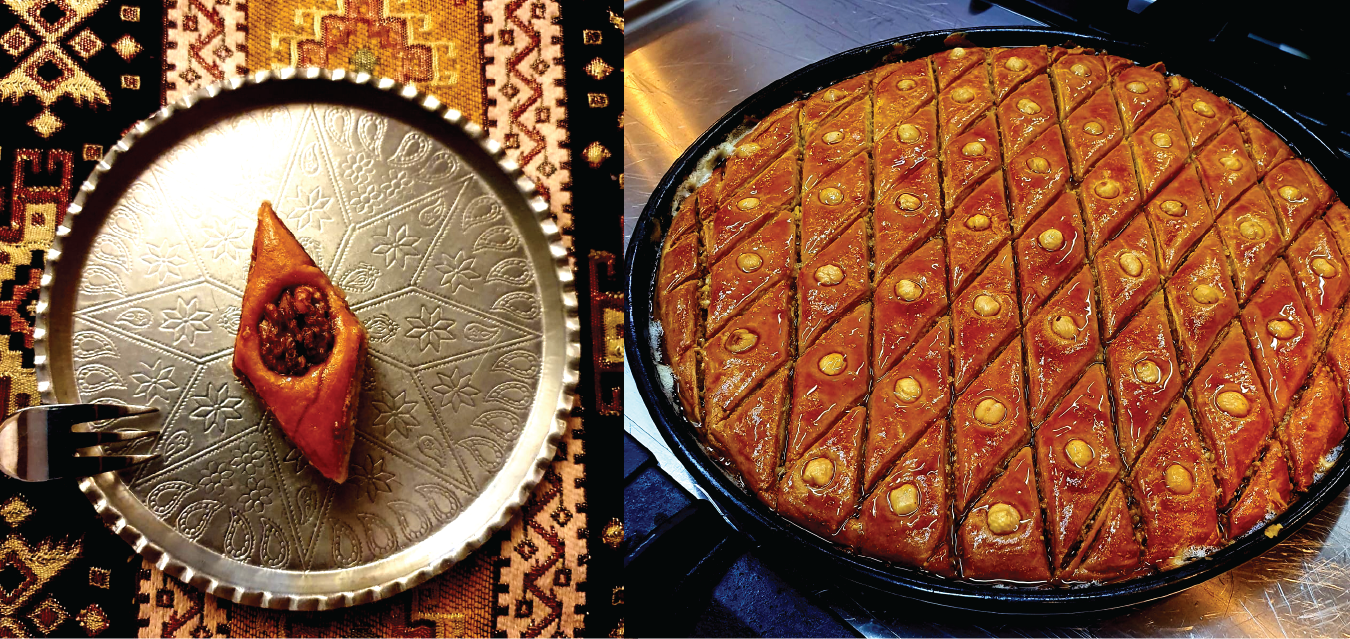
Azerbaijani baklava is traditionally cut into diamond shapes, setting it apart from the square or rectangular forms common in Turkish or Greek versions. This distinctive shape symbolizes fire—an essential element in Zoroastrianism, the pre-Islamic belief system once prevalent in the region. Fire, associated with purification, light, and rebirth, aligns closely with the themes of Novruz, the spring celebration of renewal.
The filling is typically made with finely ground walnuts, often infused with cardamom. This combination imparts a fragrant, subtly spicy flavor that distinguishes Azerbaijani baklava from other regional varieties.
Other regional styles may use pistachios or almonds without cardamom.
Thin, Handmade Dough Layers (Yufka)
- The baklava is made with 10–12 layers (or more) of very thin dough sheets, often handmade.
- Between each layer, butter or clarified butter (ghee) is generously applied, creating a flaky, melt-in-your-mouth texture.
Sugar Syrup Instead of Honey
- While Turkish or Greek baklava is typically soaked in honey-based syrup, Azerbaijani baklava is soaked in a sugar-based syrup, sometimes lightly flavored with rose water or lemon.
- This gives it a less sticky, slightly more delicate sweetness.
Egg Yolk Glaze and Nut Decoration
- The top layer is glazed with egg yolk for a shiny golden color and decorated with a half walnut or almond in the center of each diamond piece.
- This decorative touch is not commonly used in all types of baklavas.
Cultural Role in Novruz
- Azerbaijani baklava is one of the three symbolic sweets of Novruz Bayramı, along with shekerbura and goghal.
- It represents fire, while the others represent the moon (shekerbura) and the sun (goghal).
What Makes Azerbaijani Baklava Special?
| Feature | Azerbaijani Baklava | Other Regional Types |
|---|---|---|
| Shape | Diamond (symbolic) | Often square or rectangular |
| Filling | Walnuts + cardamom | Pistachios, almonds, or walnuts |
| Syrup | Sugar syrup | Honey syrup |
| Top Layer | Egg yolk glaze + nut decoration | Plain or buttered top |