6 Unique museums to visit in Baku
In Azerbaijan, a museum visit is rarely passive—it is an immersive experience shaped as much by the artifacts as by the people who curate them. Across the country, but especially in Baku, we found that museum staff were not merely custodians of history or art, but passionate storytellers. If they sensed sincere curiosity, they would go above and beyond to share their knowledge—often speaking only Azerbaijani or Russian, but with such enthusiasm that language barriers seemed to fade.
Baku boasts a wealth of museums, from grand institutions to niche collections tucked away on quiet streets. In this guide, we have chosen to highlight only those that left a lasting impression—places that stand out not for the size of their collections, but for the experience they offer. These are museums that do more than display—they engage, surprise, and stay with you long after you’ve left.
Whether your interests lie in archaeology, contemporary art, ethnography, or the beautifully unexpected, the museums featured here promise to be more than just stops on an itinerary. They invite you into Azerbaijan’s cultural soul—offering not just information, but connection.
Railway Museum
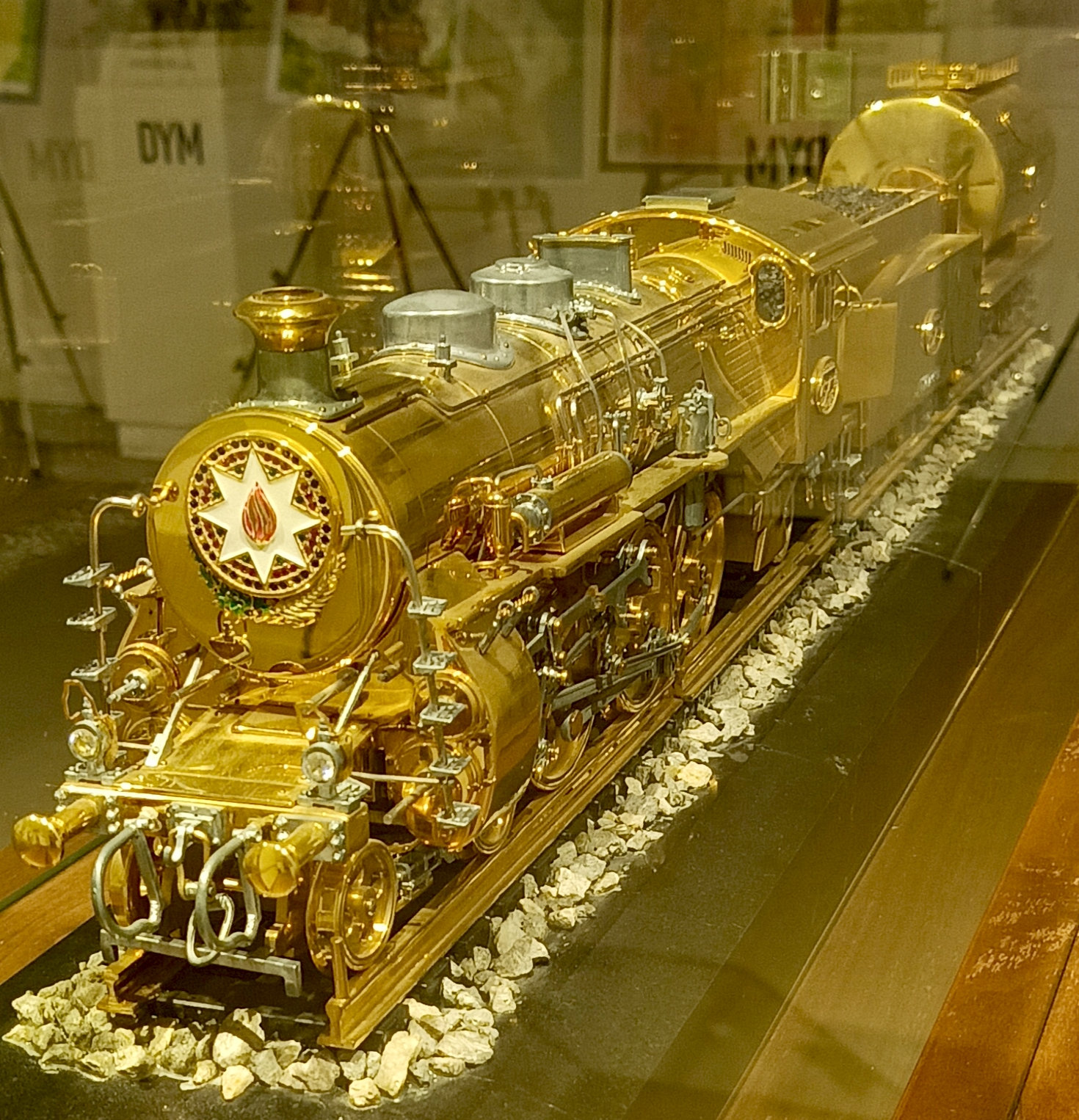
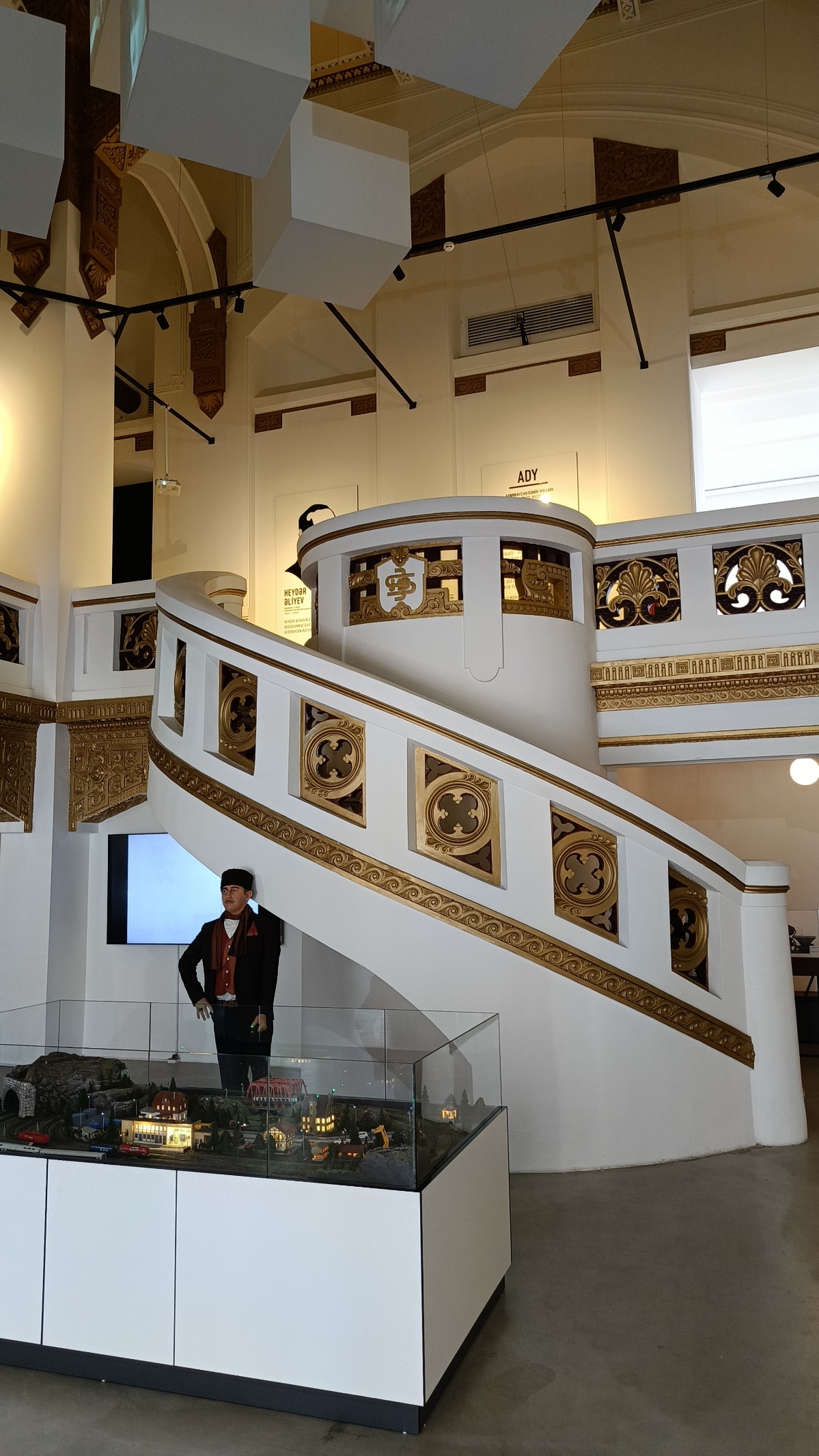
Trains, trains and more trains. A clean and modern museum which is worth it to visit. Our reason for interest in this museum is based on our love for travelling by train, experiencing the clickety clack while sleeping on your way to Zaqatala.
Heydar Aliyev School Museum
Discovering the Heydar Aliyev School Museum—after searching through numerous museums—was a truly unexpected delight. At first, we assumed, based on the name, that it would focus solely on Azerbaijan’s educational sector. However, we soon discovered that it offers something far more profound and personal.
The museum elegantly traces the life and legacy of Heydar Aliyev, capturing his educational path, formative experiences, and the influential relationships that shaped his leadership and vision. Walking through the exhibits provides not only insight into his personal journey, but also a powerful narrative of Azerbaijan’s turbulent history. It portrays the resilience, perseverance, and determination of the Azerbaijani people during times of great adversity.
This museum is more than a tribute to a national leader—it is a deeply human portrayal of a nation’s struggle, growth, and enduring hope. Through curated materials, photographs, and personal memorabilia, it offers visitors an intimate glimpse into the challenges and triumphs that have helped shape the country’s modern identity. We were also amused to find ourselves unexpectedly becoming part of the museum’s daily happenings, as a staff member enthusiastically photographed us while we explored the exhibits and browsed the archival books. For a moment, we felt like honored guests—or perhaps, minor celebrities.
Surakhani Ship Museum
Moored gracefully along Baku’s bustling seaside boulevard, the Surakhani Ship Museum is far more than a static relic, but rather a living testament to Azerbaijan’s storied relationship with the Caspian Sea and its oil-rich legacy. Launched in 1957, this mighty tanker stretches 123.5 meters and weighs nearly 4,696 tons, belonging to the famed “Engineer A. Pustoshkin” class. It carried oil across the Caspian, following in the wake of the world’s very first oil tanker, the historic Zoroaster, which ignited a new era of maritime oil transport.
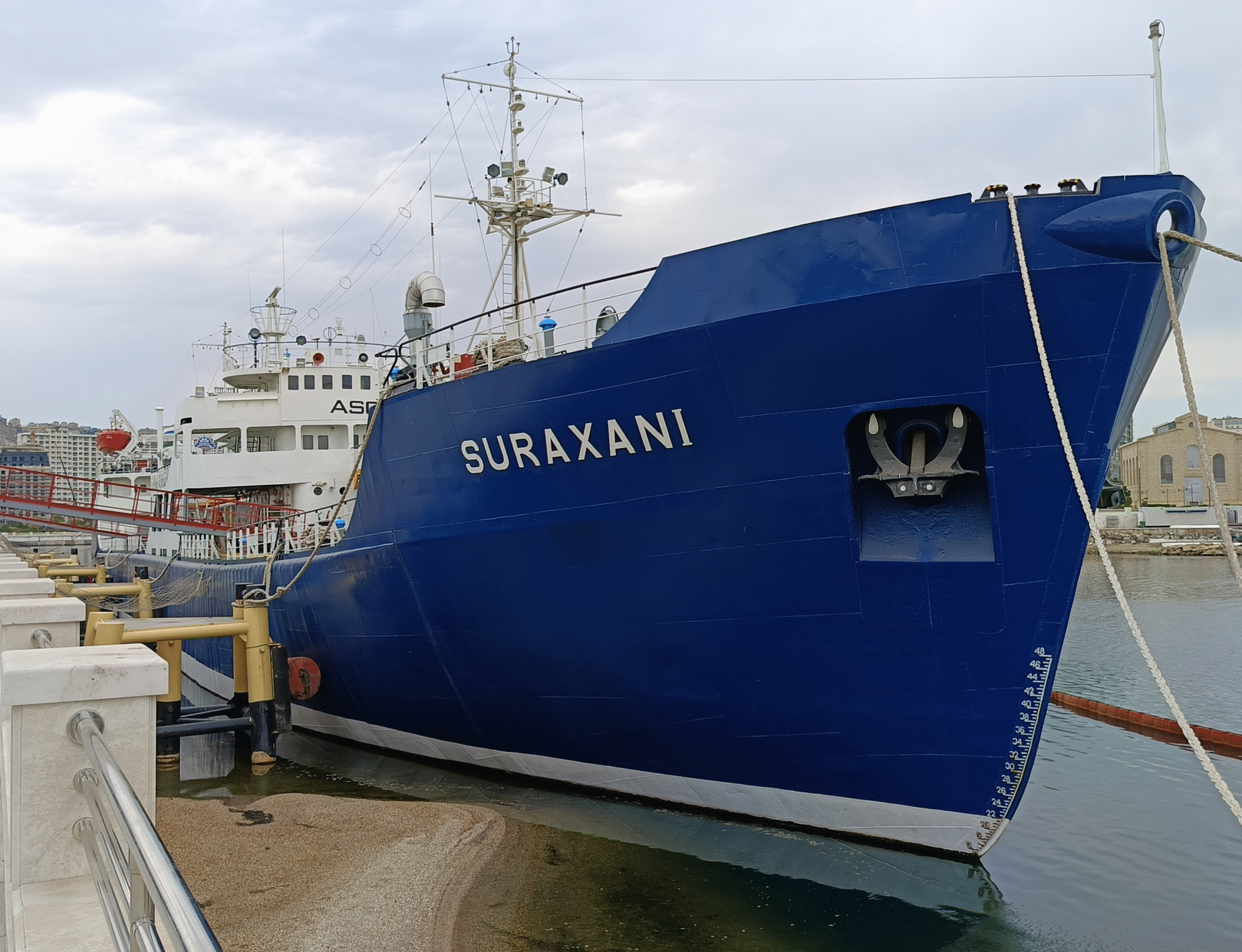
After decades of service, including time as a floating refinery, the Surakhani underwent a remarkable transformation. Supported by shipwrights and specialists from the UK, Netherlands, and Turkey, it was lovingly restored and reborn as the world’s first floating tanker museum, opening its decks to the public in 2021. Today, visitors wander through eleven exhibition halls, step inside preserved crew cabins frozen in time, explore the engine and radio rooms, and stand on the captain’s bridge, where panoramic views of the Caspian mingle with echoes of history.
The museum blends immersive, interactive exhibits with authentic artifacts and even virtual-reality experiences, inviting guests to dive into the life of seafarers who once navigated these waters. After a day exploring the ship’s labyrinth of steel corridors, visitors can unwind at the onboard café, savoring fresh seafood and Azerbaijani dishes while soaking in the maritime atmosphere. The Surakhani is more than a ship, it is a vibrant bridge between past and present, anchoring Azerbaijan’s oil heritage firmly in the heart of Baku’s waterfront.
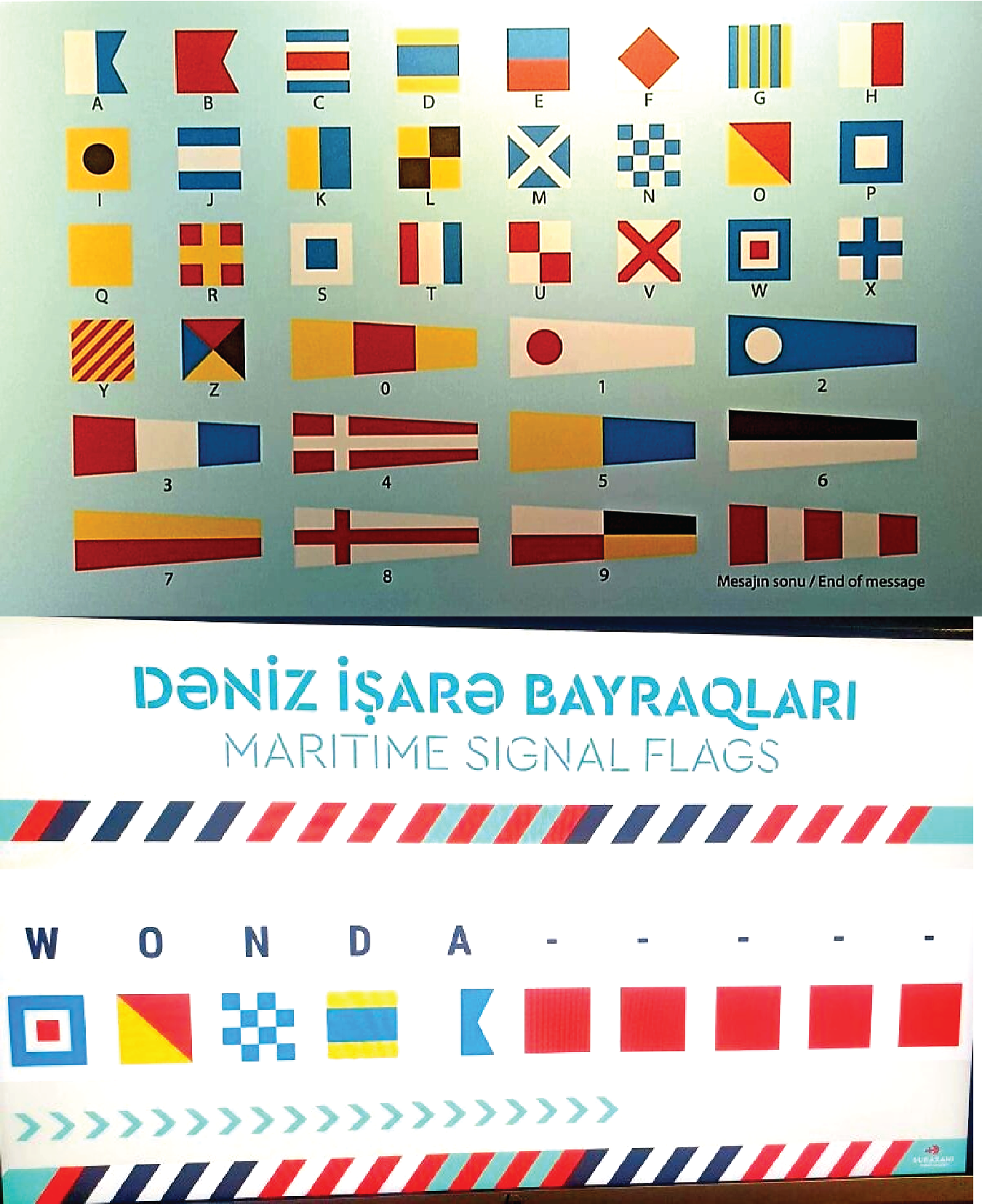
During our visit, we discovered many fascinating aspects of maritime life—one of the most intriguing being the system of International Maritime Signal Flags. These flags serve as a standardized visual communication method used by ships around the world, particularly when radio contact is unavailable or restricted. Each flag represents a single letter of the alphabet or a numeral, and many carry specific meanings when flown individually. This communication system is governed by the International Code of Signals (ICS), under the oversight of the International Maritime Organization (IMO), ensuring that vessels of all nations can convey important messages—regardless of language differences.
For example, using maritime signal flags, even a name like WONDA can be spelled out across the open sea. Each letter corresponds to a specific flag:
- W (Whiskey) – “I require medical assistance.”
- O (Oscar) – “Man overboard.”
- N (November) – “No” or “negative.”
- D (Delta) – “Keep clear of me; I am maneuvring with difficulty.”
- A (Alfa) – “I have a diver down; keep well clear at slow speed.”
If a ship hoisted these flags together, they would visually spell out WONDA for observers nearby. However, when displayed individually, each flag conveys an important message that could warn other vessels of emergencies or navigational concerns.
Although modern technology has reduced the everyday use of signal flags, they remain a respected and recognized system. Today, they are still frequently used during ceremonial occasions, safety drills, and situations where radio silence is required. Their vivid colors and simple geometric shapes make them highly visible and effective—even in poor weather or across great distances—preserving the timeless tradition of visual maritime communication.
Another fascinating feature of the region is the Caspian Sea, the world’s largest inland body of water, a place of contrasts, neither quite sea nor lake, but something uniquely in between. Its waters are brackish, a delicate salty-sweet blend formed where mighty rivers like the Volga (Russia) and Ural (Russia) pour freshwater into this vast, landlocked basin, mingling with salt left behind over millennia. Unlike the pure freshwater streams where delicate crayfish thrive, the Caspian’s open waters are too salty for them to survive. However, in the brackish shallows and freshwater inflows along its coasts, hardy crawfish-like crustaceans find refuge, eking out a living at the boundary of fresh and salt.
The Caspian is home to a rich variety of fish, including the legendary sturgeon, prized for its world-renowned caviar, as well as catfish, pike perch, and carp, species usually found in freshwater but able to survive here thanks to the Caspian’s unique brackish waters. This unusual environment, with salinity about one-third that of the ocean, allows freshwater-tolerant species like carp and catfish to thrive in the less salty northern and coastal regions, blurring the line between freshwater and marine ecosystems. Adding to this diverse ecosystem, the Caspian is also famous for the Caspian seal, one of the few seal species living entirely in freshwater or brackish waters. These elusive marine mammals glide gracefully beneath the surface, a reminder of the sea’s remarkable biodiversity.
Though linked to the Black Sea and Mediterranean via a network of rivers and canals, the Caspian Sea remains ecologically isolated, fostering a complex and highly specialized ecosystem. Salinity, temperature, and depth vary markedly from its shallow, freshwater-influenced northern reaches to the deeper, saltier southern basin. This gradient creates a unique natural boundary, where only organisms adapted to the brackish balance can thrive. Pure freshwater species—such as crayfish—remain confined to inland rivers and lakes, unable to survive the Caspian’s fluctuating salinity. The Caspian stands as a vivid testament to nature’s delicate negotiation between land and sea, salt and sweet.
Botanical Gardens
The Central Botanical Garden in Baku stands apart from similar institutions around the world. Established in 1935, this 40-hectare site primarily focuses on the conservation and study of native and regional flora, particularly species from the Caucasus and the Caspian Basin. Unlike many international botanical gardens, it is less oriented toward tourism and more dedicated to research. Tourist infrastructure is limited, offering only basic facilities. Nonetheless, the garden provides a quiet and non-commercialized setting ideal for a peaceful walk, though it does not match the scale or amenities of more developed global counterparts.
- Located in the Badamdar district, the garden hosts a wide variety of trees. The name Badamdar (بادامدار) has Persian roots, composed of:
- Badam (بادام) — meaning almond, and
- -dar (دار) — meaning tree or place with,
- Together, Badamdar translates to place with almond trees.
Today, the garden is regarded as a symbol of national pride. Following an extensive restoration and reconstruction effort completed in autumn 2024, the Central Botanical Garden reopened to the public. The opening ceremony was attended by President Ilham Aliyev and First Lady Mehriban Aliyeva, underscoring the garden’s cultural and environmental significance for both Baku and the nation.
As a result of the recent restoration and reconstruction efforts, the Central Botanical Garden has been significantly revitalized. Particular attention has been given to the newly established modern greenhouse, designed to house rare and exotic plant species from around the world. Unfortunately, during our visit, the greenhouse remained closed due to ongoing climatization procedures.
Beyond the greenhouse, newly constructed pedestrian bridges and tree-lined avenues provide a tranquil setting for leisurely walks, accompanied by the gentle sounds of birdsong filtering through the canopy. Strategically placed rest areas, equipped with essential amenities, offer shaded spots beneath mature trees. These spaces create a serene atmosphere where families and individuals alike can unwind, reconnect with nature, and find respite from the fast pace of urban life.