5 Metro Stations in Baku
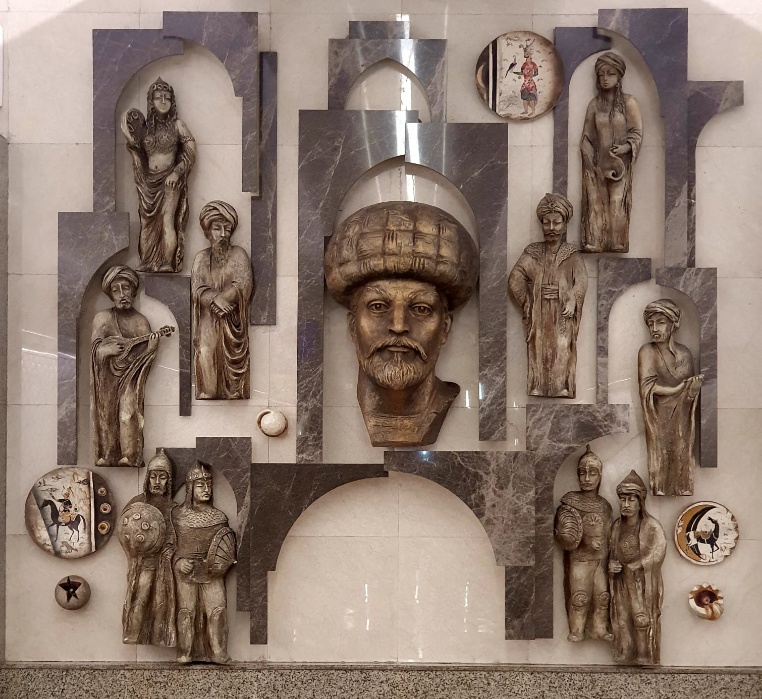
During our many visits and conversations with locals, we came to understand that Koroglu is a name steeped in meaning. Derived from “Kor,” meaning blind, and “oğlu,” meaning son, the name translates to “son of the blind.” This revelation prompted us to reflect on how easily we, as visitors, pass through metro stations and city landmarks without pausing to consider the deep histories embedded in their names. Each name tells a story, often linked to folklore, national heroes, or significant historical moments.
Another remarkable figure whose legacy we encountered is Qara Qarayev, a towering presence in Azerbaijan’s cultural landscape. A renowned composer, Qarayev is celebrated for his masterful fusion of traditional Mugham—a complex and emotive Azerbaijani musical form—with classical symphonic structures. His compositions did more than delight audiences; they redefined national identity through music, securing his place as one of Azerbaijan’s most revered artistic icons.
These discoveries reminded us that names are not merely labels—they are vessels of memory, artistry, and national pride. And sometimes, all it takes to uncover these stories is a moment of curiosity, and a willingness to listen.